English
The Remarkable Story of the Colossi of Memnon
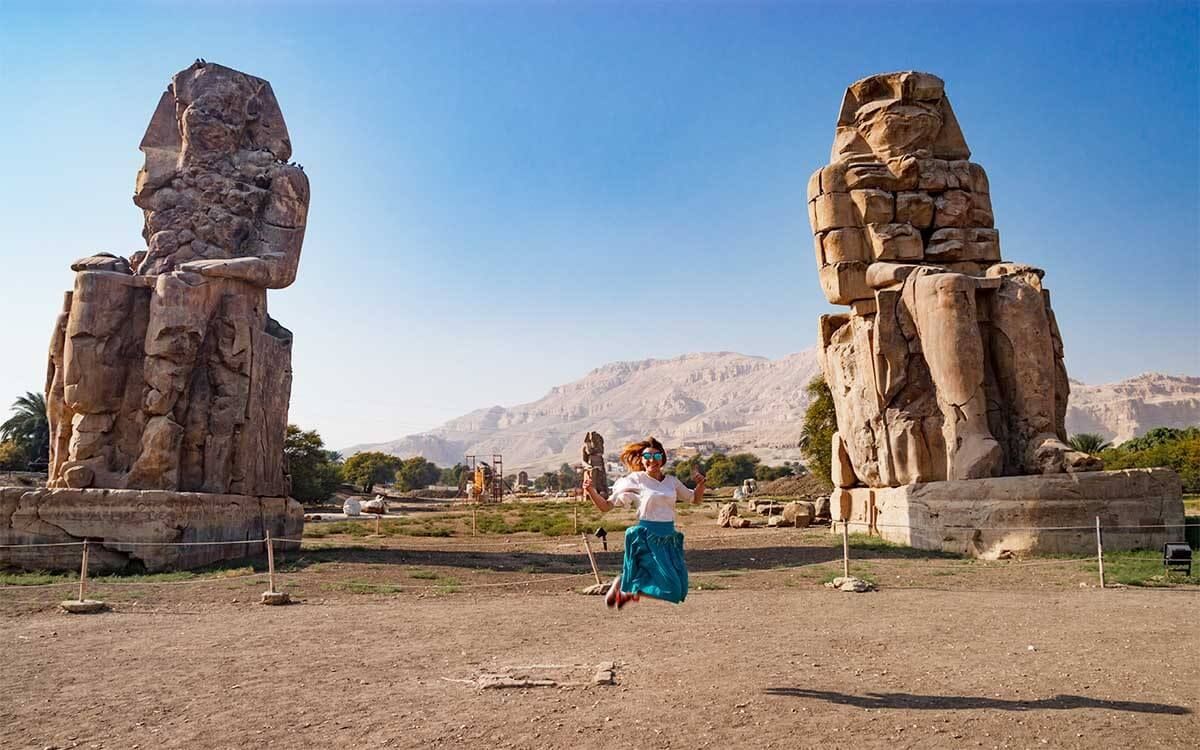
The Colossi of Memnon were erected during the rule of Pharaoh Amenhotep III, an important ruler of the New Kingdom period in Egypt. His purpose in commissioning these magnificent statues was to ornament his vast mortuary temple and celebrate his godlike reign. Though the temple itself has now long vanished, owing to seismic damage, the Nile floods, and the erosive passage of time, the Colossi remain standing vigilantly, standing proud and silent against the barren backdrop. In the Graeco-Roman period, travelers renamed the statues, linking them to a legendary Ethiopian king named Memnon. It became known of and documented by visitors that the northern Colossus gave a strange vocalization at dawn, this earned the statues fame during antiquity. This blending of ancient Egyptian and classical lore have made it one of the most popular and historically interesting sites in the area of Luxor for visitors of both types, especially those with an interest in archaeology, mythology and ancient Egyptian history. Situated near many of the most well known of the West Bank sites such as the Valley of the Kings, it is one of many ancient necropolises that constitute the historical landscape of Luxor.
Colossal Architecture and Masterful Artistry
The Colossi of Memnon are an outstanding example of Egyptian monumental sculpture; impressive not just for their scale but also for the artistic skill shown in their creation. Carved from a single block of sandstone quartzite which was transported from quarries hundreds of kilometres away, it is an example of what ancient Egyptian engineers were capable of doing. Carved at Amenhotep III seated on his throne in a highly formal, royal stance, the two giant figures display the importance of his royal power, and his status as king; small figures of his wife Tiye and mother Mutemwiya sit at his feet; depicting both his familial links and the sanctity of his blood line and claim to the throne. The Colossi are remarkable in that although they have suffered a significant amount of wear and tear, from earthquakes, flooding and erosion, and are damaged, the colossal stone figures are still standing upright and are remarkable testaments of eternity and divine kingship.
The Legend of the "Singing Statue"
One of the most notable aspects to the Colossi of Memnon is the legend of the "Singing Statue". During the reign of the Graeco-Romans travellers observed the northern statue vociferating and claimed that it was the singing and greeting of Memnon to his mother Eos (the dawn goddess). The actual phenomenon however, is caused by the stone and temperature changes when cracks allow for air expansion and contraction making noises that can be heard with the naked ear. The sound it made became so popular in antiquity it drew many visitors and Roman Emperors to the statues, so making it a particularly significant site of historical import due to its mythical aura, appealing for both history buffs, mythology enthusiasts and culture lovers alike.
Visiting Experience and Useful Travel Tips
As mentioned earlier, the Colossi of Memnon is arguably one of the easiest of the West Bank sites to get to and so to visit. The site is positioned at the beginning of many of the tourist itineraries on the West Bank. As one of the few sites that can be stood right next to, at the base of the enormous stone figures, it is easy to imagine oneself of the same scale of the ancient Egyptians who created the structures. It is part of a whole circuit of the West Bank of Luxor which may consist of the Temple of Hatshepsut as well as other various tombs. It is usually visited towards either the end of or beginning of the tour and visitors are urged to take photographs from multiple viewpoints and appreciate the vast desert plains that stretch before the monuments.
Why the Colossi of Memnon Are a 'Must-See' Attraction
As important pieces of pharaonic Egypt and iconic landmarks of Luxor, the Colossi of Memnon are significant. These ancient sculptures represent an undeniable piece of history and culture for those visiting Egypt and the wonders of Luxor. As constant watchers of millennia and testament to the power of the ancient pharaohs, they are a spectacular sight for history lovers, photographic enthusiasts and explorers alike, truly offering a window to a bygone era in the captivating landscape of Egypt.