English
What is a pharaoh then?
The word pharaoh was not what the king was called by. The pharaoh derived from the Ancient Egyptian word "Great House". Great House was another way to refer to the palace and the king's post.
As time passed, it came to be the word used to refer to the king of Egypt. During the New Kingdom, it was already becoming the title by which the ruler of Egypt was known to foreign peoples and neighboring kingdoms.
It's worth noting that Egyptian rulers were typically known by divine and powerful royal titles and were not called king by their own people.
Today, to those traveling through ancient Egypt, "pharaoh" signifies:
Divine authority
Political leadership
The defender of Egypt
The link between gods and people
Queries such as "what does pharaoh mean," "Egyptian king titles," and "Egyptian royal names" are a constant feature on the search engines for history lovers and cultural travelers.
The Five Royal Names of the Egyptian Pharaoh
Unique to ancient Egypt was the five part royal name. These are the royal titulary, which stated the various divine positions and powers of the king.
The Horus Name
This title was given in recognition of the king's earthly incarnation as the falcon god Horus.
The Horus name was usually presented within a palace like symbol, known as a serekh, with a falcon image above it.
The Two Ladies Name
These names represent the protection of the two great goddesses, patron goddesses of Upper and Lower Egypt respectively;
Nekhbet, the vulture goddess of Upper Egypt
Wadjet, the cobra goddess of Lower Egypt
The name signified the unification of Egypt.
The Golden Horus Name
The original meaning of this name is not clear and is still debated among historians but likely represented the eternal nature of kingship and power.
The Throne Name
Otherwise known as the prenomen, this was the official royal name, used from coronation onwards. Usually beginning with "Chosen by Ra," it denoted the king's connection to the sun god.
Written within a royal cartouche it was presented on inscriptions, monuments and temples throughout Egypt.
The Birth Name
This is the name of the pharaoh, given at birth. Also presented within a cartouche, this was commonly prefaced by the title "Son of Ra."
Well known examples are:
- Tutankhamun
- Ramesses II
- Khufu
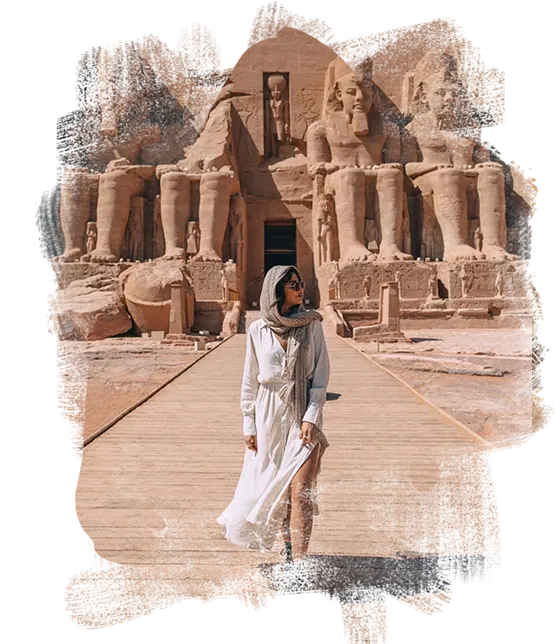
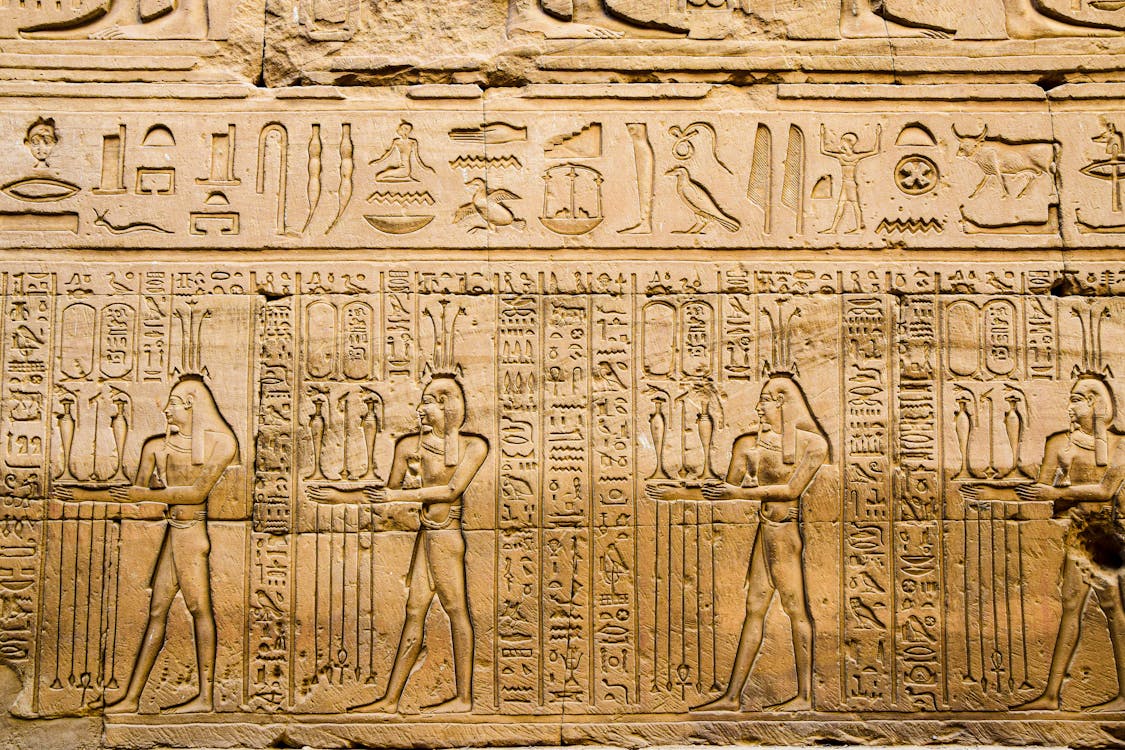
These cartouches on temple walls and statuary are readily identifiable for travelers and it is possible to look for the symbols you see, as this makes exploring sites like Abu Simbel, Luxor and Karnak of infinitely more value.
Why did a Pharaoh Have Five Names
The various royal names of a pharaoh signified the multiple aspects of kingship, religion, and political authority. The ancient Egyptian concept was that the pharaoh was not simply a human king, but was responsible for maintaining equilibrium throughout Egypt.
Each royal title served a particular purpose:
Divine protector of Egypt
The Son of the sun god Ra
The Uniter of the land of Egypt
The Mighty warrior
The Guardian of cosmic order, known as Ma'at
Furthermore the royal titulary served to establish the legitimacy of a ruler, especially in times of uncertainty or transition between dynasties.
Hatshepsut, one of the only female pharaohs in ancient Egyptian history, used masculine royal titles in order to bolster her position as king of Egypt.
Akhenaten amended parts of the titulary during his reign in order to signify his move towards worship of only the Aten god.
Travelers exploring Egyptian temples and museums can often interpret the ruler's intentions and beliefs simply by deciphering their titles and their meaning.
The Cartouche and Hieroglyphics-How to Understand the Kings and Queens Names
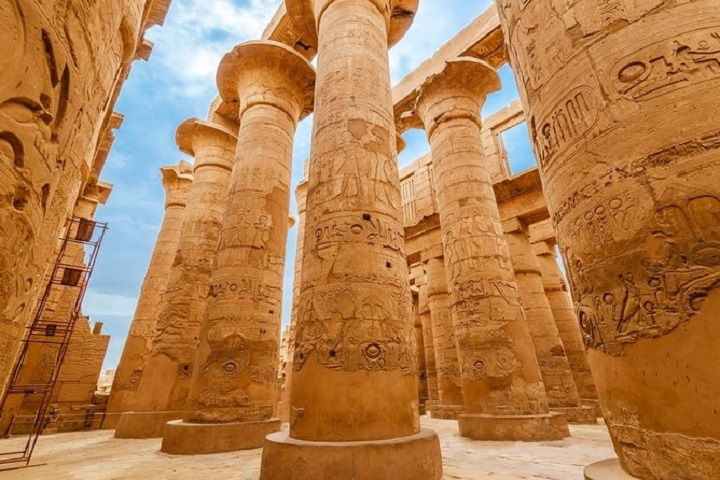
The royal cartouche, an oval shape containing the name of a king or queen, is one of the most famous symbols in Egyptian art. The ancients believed that enclosing the ruler's name within the cartouche offered protection and a measure of eternity.
You will find the royal cartouche adorning many of the ruins and historical sites scattered across Egypt such as:
Luxor Temple
Karnak Temple Complex
Abu Simbel Temples
Visitors will enjoy the aspect of tracing the lines and pictograms of royal names etched in hieroglyphics and many experiences offer the opportunity to have a personalized cartouche made up of your name in ancient Egyptian.
"How to read Egyptian hieroglyphics," "cartouche meaning in ancient Egypt," "ancient Egyptian royal symbols" and "famous pharaoh names" all popular searches for both prospective and existing travelers of Egypt, who are hoping to understand more about the wonders they are about to or will experience.
Political Significance of Royal Titles
The pharaonic names themselves had political connotations. When pharaohs achieved success in battle, brought about a religious reform or experienced an important event, they altered or increased their names.
The new kings acquired names that would assist them in:
Proving their legitimacy
Aligning themselves with a desirable god
Establishing continuity with former esteemed rulers
Reinforcing Egyptian unity
This proved especially useful during times of conflict or foreign intrusion when an impressive name reassured Egyptians of order and divine harmony within the kingdom. New Kingdom pharaohs linked themselves with the god Amun when they expelled foreign intruders and reconstructed the Egyptian empire. To this day one can witness countless times of inscriptions of royal names on temple walls, statues, columns and obelisks-almost as propaganda to imprint the idea of the king's divine rule into the minds of Egyptians.
Names of the Pharaohs' Eternal Power
Thousands of years have passed since the fall of ancient Egypt, yet still around the world people are enchanted by the names of Egyptian rulers. Names like Tutankhamun, Ramesses, Khufu and Hatshepsut, still feature in museums, in documentaries, in books and on travels around Egypt because of the great civilization which produced them.
The names of the pharaohs, both their names and titles, were specifically constructed to remember, and eternally memorialise, their power and divinity. And, they did succeed.
Each and every carved cartouche and every hieroglyphic carving in the lands of Egypt still continues to relate, or remember, an Egyptian ruler who helped mould history and build monumental masterpieces, that so intrigue travelers across the earth.
The Enduring Legacy of Pharaoh Names and Titles
The names and titles bestowed upon Egyptian pharaohs are more than just ceremonial titles, they represent immense power, legitimacy, and eternal identity.
Every title, from the Horus Name to the Royal Cartouche, held sacred religious and symbolic meaning and reveal our current understanding of what kingship, and indeed humans, meant to the ancient Egyptians.
By recognizing and interpreting these royal titles within the tombs and temples of Egypt, visitors transform ancient inscriptions from mystical symbols into meaningful histories of power and faith.
Visitors who take the time to explore and learn about the ancient rulers and their titles will leave with an unparalleled experience of the majesty and wonder that is ancient Egypt.