English
A street that carries more than a thousand years of history
One of Cairo’s oldest streets, Al-Muizz Street dates back to the Fatimid period in the 10th century. Over time, it was transformed into the main artery of the city, with mosques, schools, palaces and souks lining its route.
However, what’s truly amazing about this place is how much of history is still layered and preserved in one place. As you walk down Al-Muizz street, you’re literally traveling through various stages of Islamic era. From simple Fatimid architecture to Ayyubid structures embodying both strength and spirituality and Mamluk buildings featuring ornate stone work and exquisite decor.
Most historical sites tend to be separate, some of them are even rebuilt or partially reconstructed. Yet, unlike many places, Al-Muizz Street has it all, in its original environment making it one of the most genuine heritage streets in the world.
The experience: walking down the street
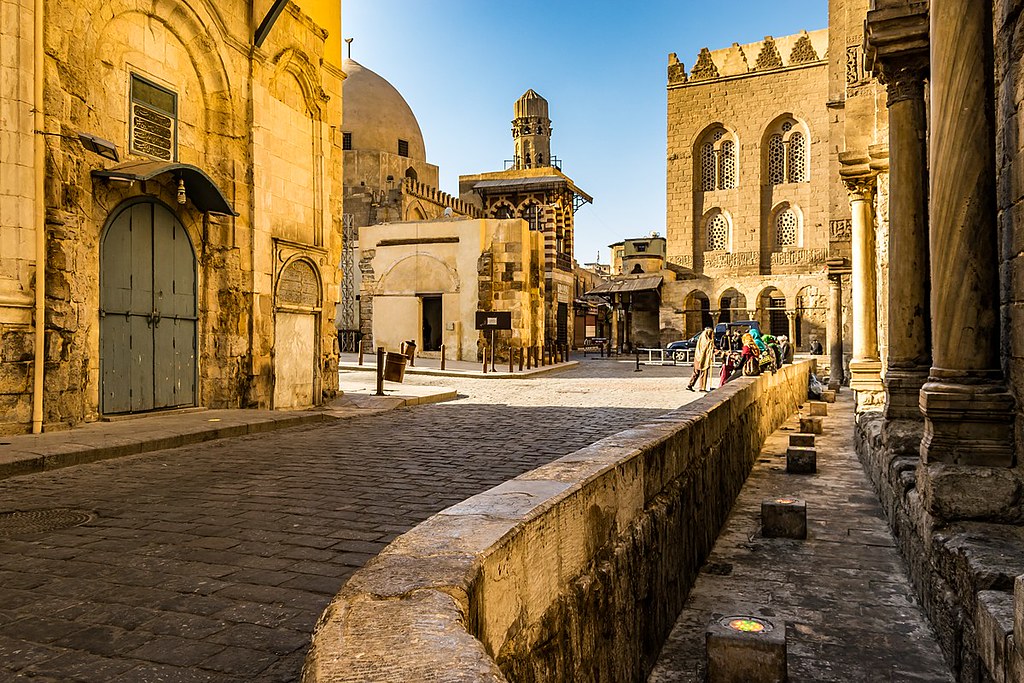
What distinguishes Al-Muizz Street from typical tourist sites is that walking down it is much like living a never-ending story.
The street extends for nearly one kilometer, however, at nearly every step you feel that you are coming across a landmark. A gigantic historic gate that used to guard the city, a beautifully restored mosque with amazing carvings, a serene courtyard hidden away behind ancient stone walls, or a traditional workshop where handicrafts are still created by hand.
It is a place not to be rushed through. Instead, it naturally invites you to slow down, stopping constantly-to gaze at ornately decorated balconies, to touch the ancient stone walls, and to admire how sunlight plays upon the buildings built centuries ago. This is perhaps why Al-Muizz Street is considered as one of the best walking tours in Cairo for tourists who value culture and enjoy photography.
The epitome of Islamic architecture
Certainly, it is no exaggeration that some of the primary reasons why travelers visit Al-Muizz Street is for the amazing Islamic architecture that fills this street. It actually houses some of the most important Islamic monuments in Egypt. Among them, there are many which have been restored perfectly, while others have maintained their original grandeur without any alterations.
Some examples are: grand mosques featuring magnificent domes and soaring minarets, traditional Islamic schools (madrasas) known for their geometrical designs, ancient palaces and homes decorated with beautifully carved mashrabiyas (wooden screens), as well as intricately decorated stone monuments reflecting the long artistic tradition and history of these craftsmen. Each of these monuments carries its own uniqueness, however, collectively they depict an image of golden age Islamic Cairo.
What makes this street unique at night is even better; with its special, soft lighting, the whole street has a very romantic, almost cinematic feel that transports you to an imaginary place away from this reality.