English
History of the Catacombs
The catacombs date to the second century BC, during Roman rule in Egypt, when the sites were first intended to be used as an underground burial place for aristocratic families; they later evolved to become an enormous underground necropolis. The site serves as an excellent representation of ancient Alexandria and the merger of cultures within its borders; Egyptian traditions combined with Greco-Roman artistic styles.
Exploring the underground tombs
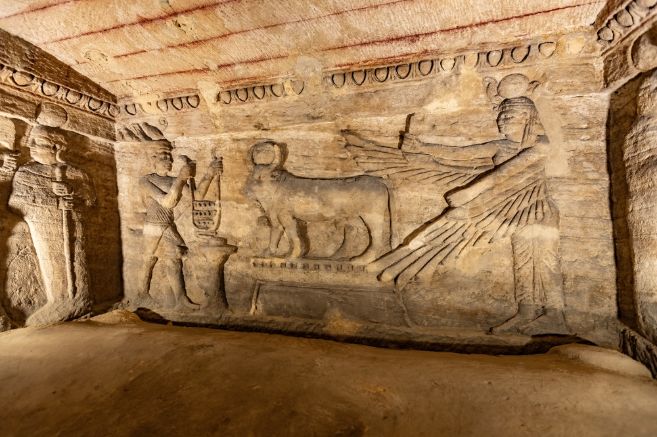
The catacombs go down for three stories below ground and consist of spiral stairways carved into solid rock, which visitors can use to descend and discover burial chambers, corridors and niches that feature impressive carvings and ancient artwork. These are perhaps most uniquely characterized by their design, combining Egyptian iconography with Roman architectural characteristics.
Remarkable Art and Decorations
One of the most arresting features of Kom El Shoqafa are its artistic decorations and artwork; the sarcophagi and walls of the catacombs feature numerous illustrations of gods dressed in Roman attire as well as beautifully carved relief work and symbolism relating to death and the afterlife. These unique features combine to make Kom El Shoqafa an extremely rare archaeological gem in Egypt.
Reason Why Kom El Shoqafa Is Worth A Visit In Alexandria
Kom El Shoqafa catacombs are somewhat of a hidden treasure in Alexandria. They offer visitors a one of a kind glimpse into ancient burial customs and multicultural traditions and history, which, along with the air of mystery they evoke, will surely make for an unforgettable visit for anybody travelling to the historical country.